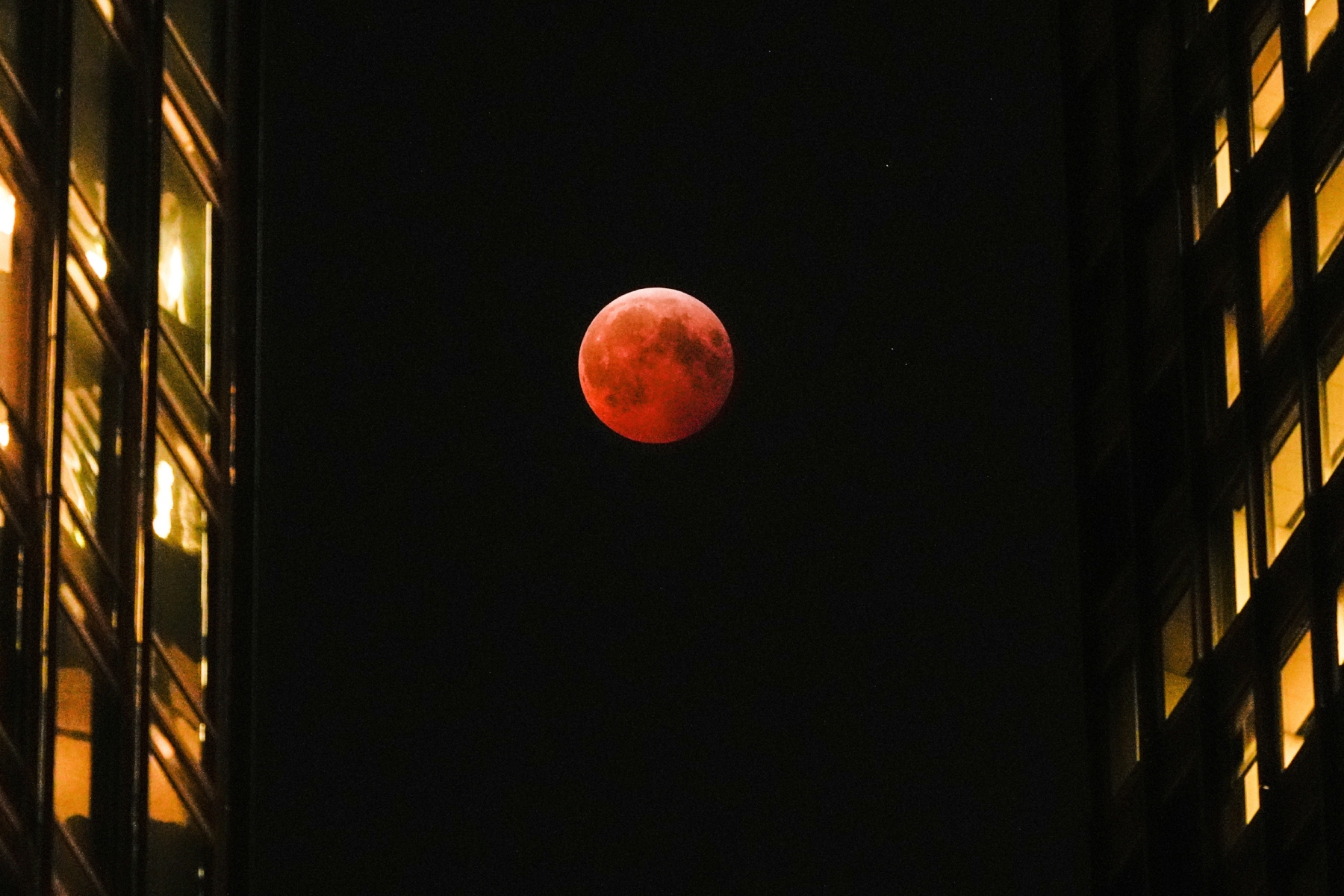
ASHEVILLE, N.C. (828newsNOW) — Western North Carolina residents have a chance to see a total lunar eclipse early Tuesday morning, but timing and clear skies will be key.
The so-called “blood moon” will be visible across the state, including Asheville and surrounding mountain communities, but the moon will be very low in the western sky and setting just as totality occurs. Observers will need to get up early and find a clear view to catch the full effect.
Eclipse timeline for Asheville area
- 3:44 a.m.: Penumbral eclipse begins (Earth’s faint outer shadow touches the moon; subtle and hard to see)
- 4:50 a.m.: Partial eclipse begins (the moon starts to show a noticeable shadow)
- 6:04 a.m.: Total eclipse begins (the moon enters Earth’s umbra, taking on a reddish hue)
- 6:33 a.m.: Maximum eclipse (deepest red “blood moon”)
- 6:45-6:50 a.m.: Moon sets near the horizon
- 7:02 a.m.: Official end of totality
Because the moon will be setting during totality and competing with the sunrise, Western North Carolina viewers may only see part of the total eclipse. Observers farther west in the U.S. will have a longer, clearer view.
Tips for viewing in the mountains
- Look low toward the western horizon.
- Find an open ridge or overlook; avoid trees or mountains that could block the moon.
- Start watching before 6 a.m. to catch the transition into totality.
- No special glasses are needed — lunar eclipses are safe to view with the naked eye.
- Weather will play a major role. Cloud cover in the mountains could obscure the moon, but even brief breaks might allow a glimpse of the striking red “blood moon.”
Astronomers note this eclipse is also a rare selenelion, meaning the moon and sun may be visible above the horizon simultaneously for a brief moment.
Bottom line: Western North Carolina can witness the eclipse, but early risers with a clear western view will have the best chance to see the moon turn a deep, fiery red before it disappears at sunrise.